Founded by April Hu · Yale BSc EE · Stanford MBA · 5× Edu-Tech Entrepreneur · Founder, Youth Leaders Davos
Arrived in America in the 1960s as an overseas Chinese. Funded 140,000 scholarships for girls in rural China. Pioneered education for sustainable development. All without a smartphone or digital footprint.
Yale BSc Electrical Engineering. Stanford MBA. Five ventures in edu-tech and sustainability. Founded Youth Leaders Davos, bringing young leaders to the World Economic Forum — where the most impactful assignment was always the same: interview your oldest living relative.
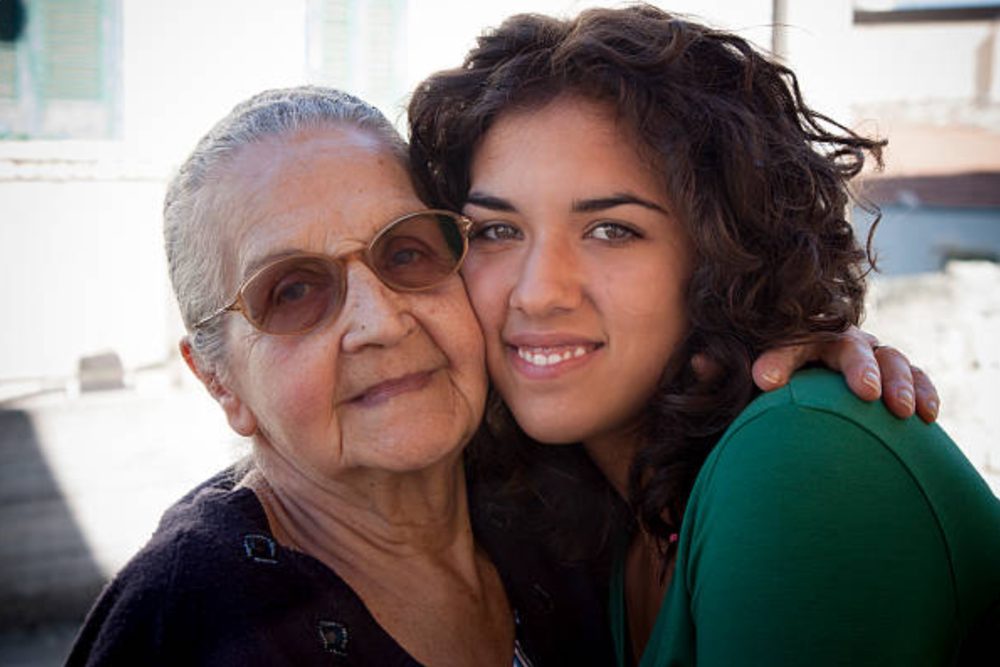
Watching her mother at 87, April kept returning to one question: what happens when this generation is gone? Treasures Bowl is her answer — a Third Transition from raising four children to honouring a generation before it's too late.
When the flag was raised on 9 August 1965, the population was 1.9 million. Of those in their twenties then, an estimated 150,000–195,000 are still alive — now in their eighties and nineties, carrying direct memory of the nation's founding. Undocumented. Pre-digital. Running out of time.
The 85+ generation lived through the most transformative century in human history — WWII, decolonization, independence movements, industrialization from rags to riches, deforestation and environmental transformation. They raised families in kampungs that became cities. They spoke languages that their grandchildren no longer understand.
They are the last generation for whom memory is the only medium. No blog posts, no social media archives, no cloud backups. When an 85-year-old passes away, a library burns down.
Of the approximately 7,000 living languages spoken today, one disappears every two weeks. Forty-three percent are classified as endangered. TreasuresBowl's video story capture doesn't just preserve a person's narrative — it records the sound of vanishing languages, dialects, and oral traditions that no dictionary can hold. Every recording is a linguistic time capsule.
Build a prototype product through an already revenue-positive genealogy platform with 150M+ ancestor records. Create a "Story Layer" that transforms static genealogical data into living oral histories. Establish the business model and business plan by end of 2026.
Sell to Singapore government agencies, private eldercare centres, families seeking legacy preservation, and the Zigen Fund donor community through "Zigen Story Lab" — turning donor stories into intergenerational heritage.
Build the technical platform — secure storage, AI transcription and multilingual translation, database linking stories to genealogical records — and create an ecosystem connecting three roles: the Storyteller, the Story Listener, and the Creator.
A "Story Layer" integrated with MyChinaRoots — where a user who finds their ancestor's immigration record can also watch a grandparent's first-person video account of that same journey.
Video-first capture preserves voice, facial expression, gesture, and — crucially — the sound of languages and dialects that may not survive another generation.
A hybrid model: B2C subscriptions for families preserving their own stories, B2B licensing to eldercare facilities and cultural organizations, and B2G contracts for government heritage and ageing programmes.
Revenue streams include story creation packages, platform subscriptions, institutional licensing, and commissioned heritage projects.
A culturally-grounded wellness and heritage tool for Singapore's ageing population — therapeutic reminiscence and social connection, delivered through the Ministry of Health, Agency for Integrated Care, and National Heritage Board.
Story-capture workshops as premium programming — giving elders purpose, giving families keepsakes, and giving centres a differentiator. Per-session, per-resident subscription, or bundled with care packages.
The daughter who realizes her mother's wartime childhood has never been recorded. The grandfather who wants his grandchildren to hear his voice and his language. Self-guided video capture, professional storyteller packages, and produced story books.
Capture the personal narratives of Zigen donors and pioneers — like Pat Yang, whose story from rural Guizhou to UNESCO honorary consultant spans 85 years and two continents. Each donor's story becomes an inheritance of purpose for the next generation.
The Zigen Fund was founded by Pat Yang in 1988, when a group of international students from Hong Kong and Taiwan committed 1% of their wages to support education in rural Guizhou, China. Over 35 years, Zigen has provided fellowships to approximately 90,000 individuals, supported literacy courses for 8,000 adults, and influenced Chinese national education policy.
Pat Yang's own journey — from Guizhou to Columbia University, from grassroots activist to UNESCO honorary consultant — is a story that deserves to be told, preserved, and shared across generations. "Zigen Story Lab" begins with her story as the flagship proof of concept.
The donor's generosity is immortalized. The next generation inherits not just wealth, but purpose. And Zigen gains the most compelling content there is — real human stories of why people give.
Each donor story creates a powerful feedback loop: it deepens the donor's connection to the mission, gives their children a tangible inheritance of values, and provides Zigen with authentic content for outreach and fundraising.
The elder — or the family member on their behalf — who shares the raw material: memories, photos, documents, voice and video recordings. The one whose life fills the bowl.
The trained interviewer, volunteer, or social worker who draws out the story through guided conversation — with empathy, structured prompts, and cultural sensitivity.
The editor, designer, filmmaker, or AI tool that shapes raw material into polished output — video documentaries, written narratives, illustrated timelines, printed books, or interactive experiences.
Underneath: secure cloud storage, AI-powered transcription and translation across Hokkien, Cantonese, Mandarin, Teochew, Malay, Tamil, and English, smart linkage to genealogical records and historical events, and a privacy framework that puts families in control.
The Singapore International Festival of Arts (SIFA) is Singapore's flagship performing arts festival. Festival Director Chong Tze Chien has launched a three-year curatorial arc: Legacy (2026), Roots (2027), and Renaissance (2028).
SIFA 2027: Roots marks the festival's 50th anniversary — celebrating overlooked pioneers, revisiting founding ideas, and sparking intergenerational conversations. This is a natural home for Treasures Bowl.
A SIFA collaboration validates Treasures Bowl as culturally significant, generates national media coverage, provides a public showcase for the first 226+ stories, and positions the platform within Singapore's official arts and heritage ecosystem.
Elders on stage, accompanied by family photos, documents, and genealogical records — with real-time video.
Walk-through "story rooms" — each containing one elder's narrative told through audio, video, and artifacts.
Festival-goers sit with a Story Listener and begin capturing their own family's story on the spot.
An original work drawn from collected stories — about Singapore's overlooked pioneers, told in their own voices and languages.
Treasures Bowl is at the stage where vision meets execution. The concept is validated, the partnerships are forming, and the first pilot story — Pat Yang's — is underway. What we need now is a founding team and seed capital to bring it to life.
The initial group of facilitators will begin collecting stories in Singapore from September to November 2026 — a focused three-month sprint to capture our first cohort of elder stories, prove the methodology, and demonstrate the platform's value to institutional clients and government partners.
We are assembling a founding team: story facilitators and trained listeners, a technical lead for platform development, a partnerships lead for institutional and government relationships, and a creative director for story production. Roles suited for people who believe elder stories matter — and who want to build something that outlasts them.
Seed capital to fund the September–November 2026 collection sprint, minimum viable platform build, the SIFA 2027 proposal development, and initial business operations. This is a social enterprise with a clear path to revenue through B2C, B2B, and B2G channels — not a charity, but a mission-driven business.